Client
Eghamat24.com
Services
User Research Usability Test Competitor Analysis User Journey User Flow Wireframe Experience Design
Industries
Travel & Hospitality
Date
September 2022
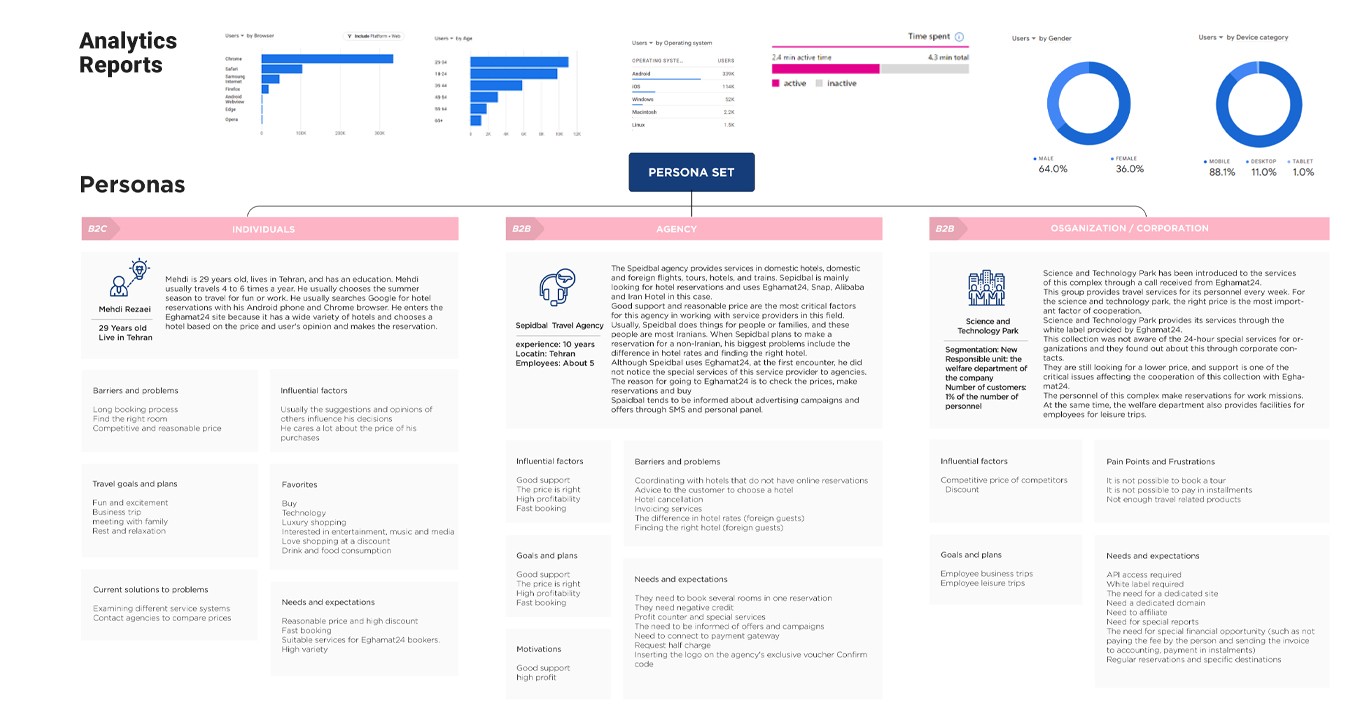
Identified Problems: Investigations into the fields and content of each stage of the hotel reservation journey revealed that different types of users were being directed to the same path. Over years of product development, each new user group's needs had been layered onto the existing process, resulting in increasingly complex and lengthy reservation forms. Our first solution was to personalize the journey for different user groups. - B2C (Individual Users): Such as Mehdi, who typically travels 4 to 6 times a year and seeks online options mainly influenced by price and opinions. - B2B (Agencies): Like the Sepidbal Travel agency, which often looks for hotel reservations and values good support and reasonable pricing when choosing service providers.
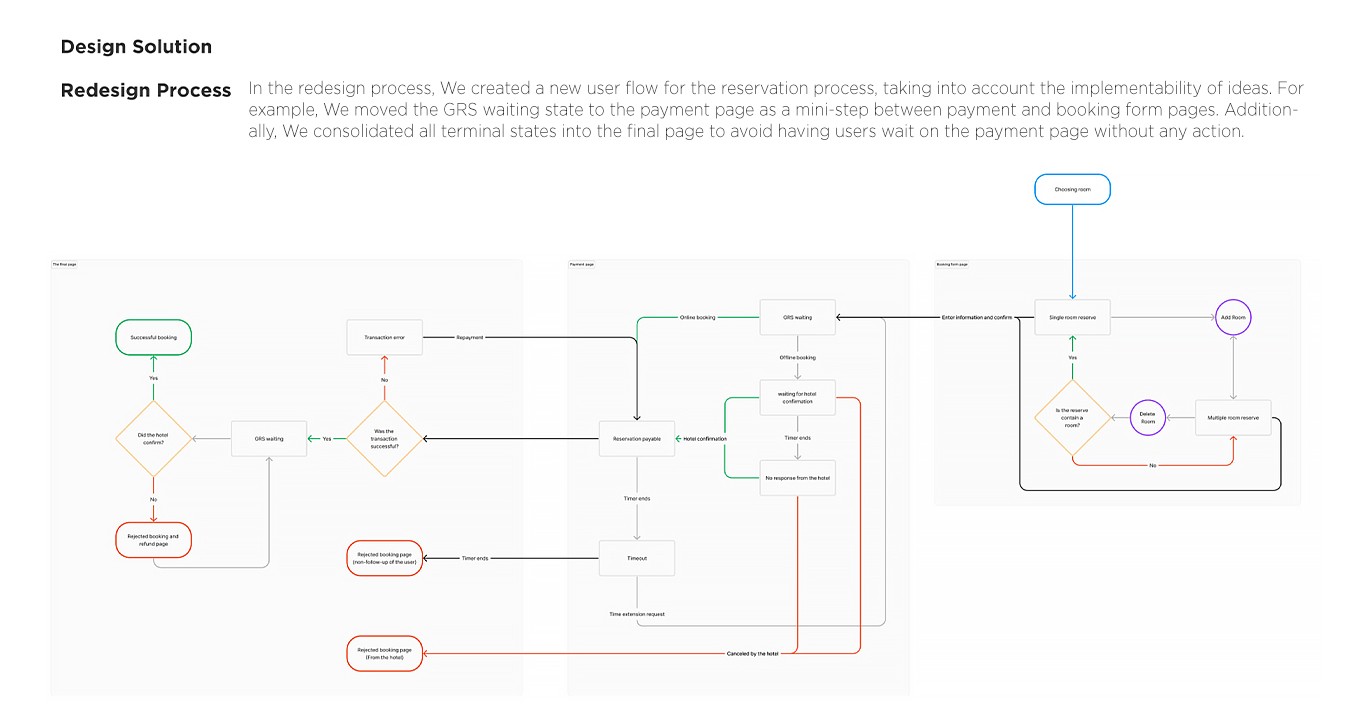
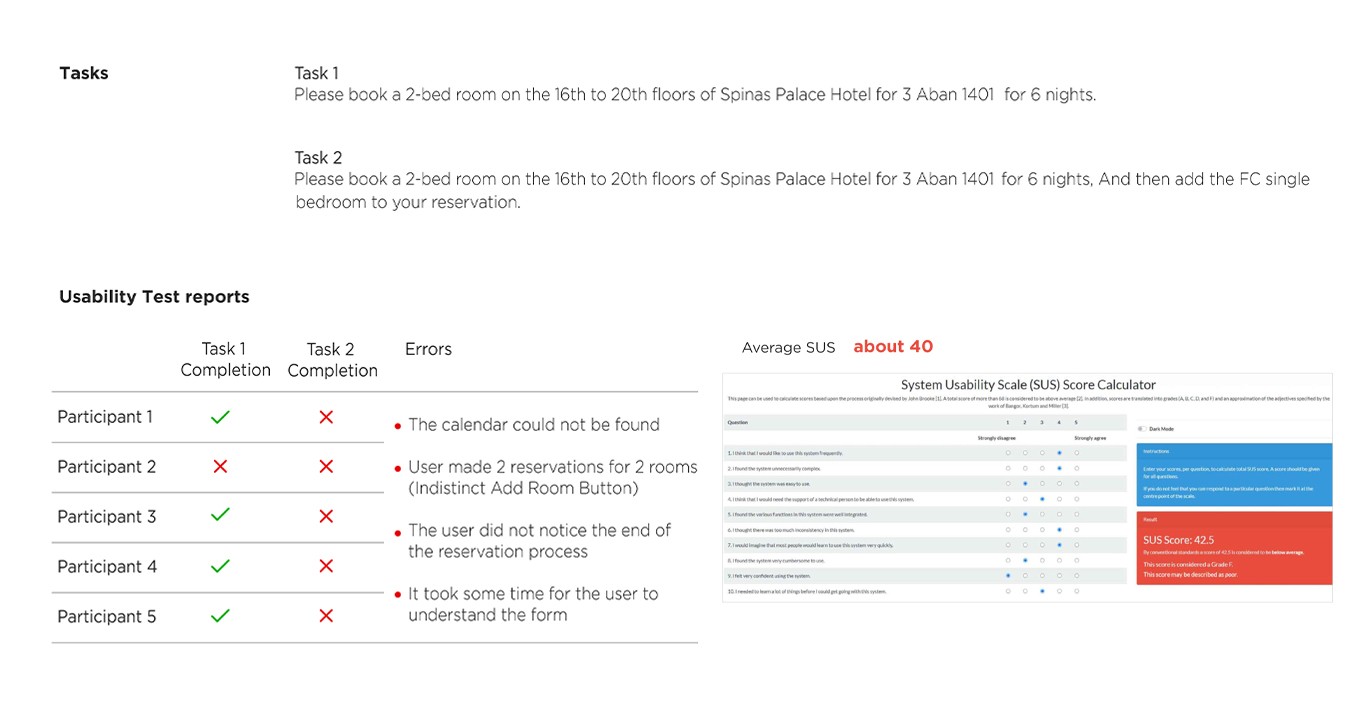
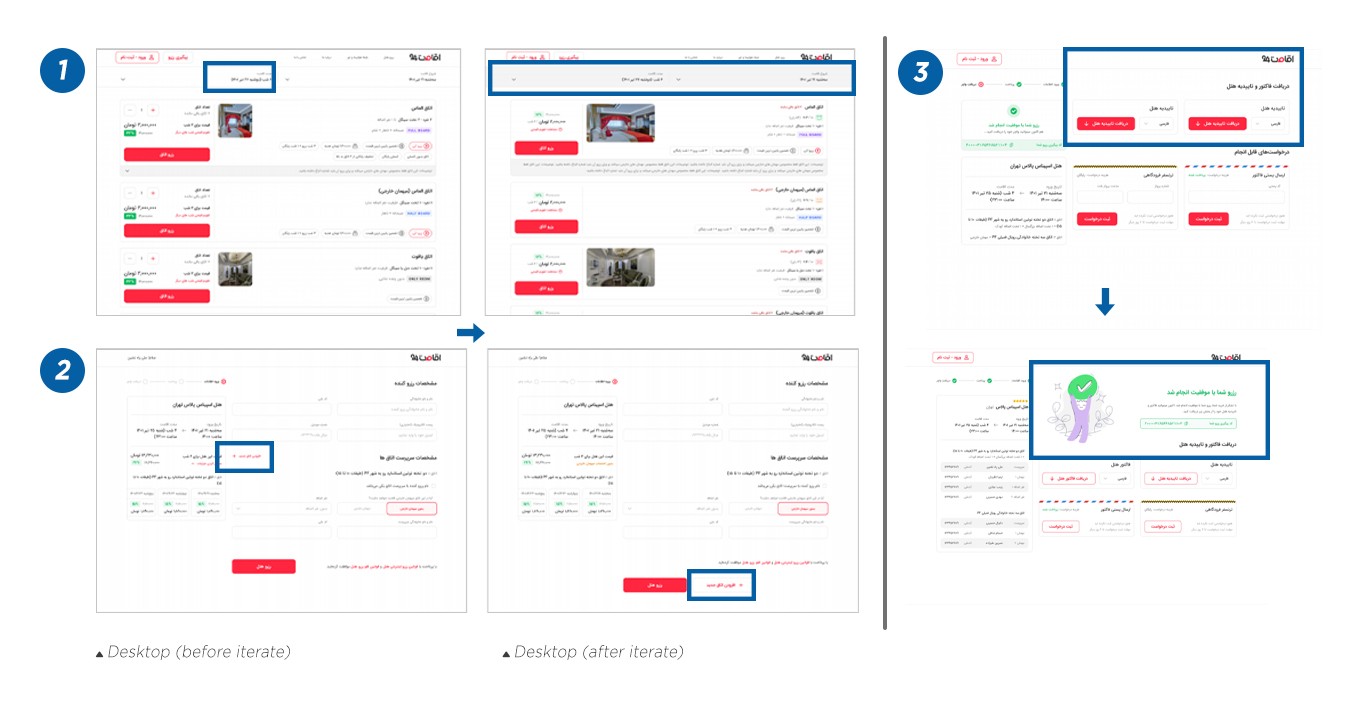
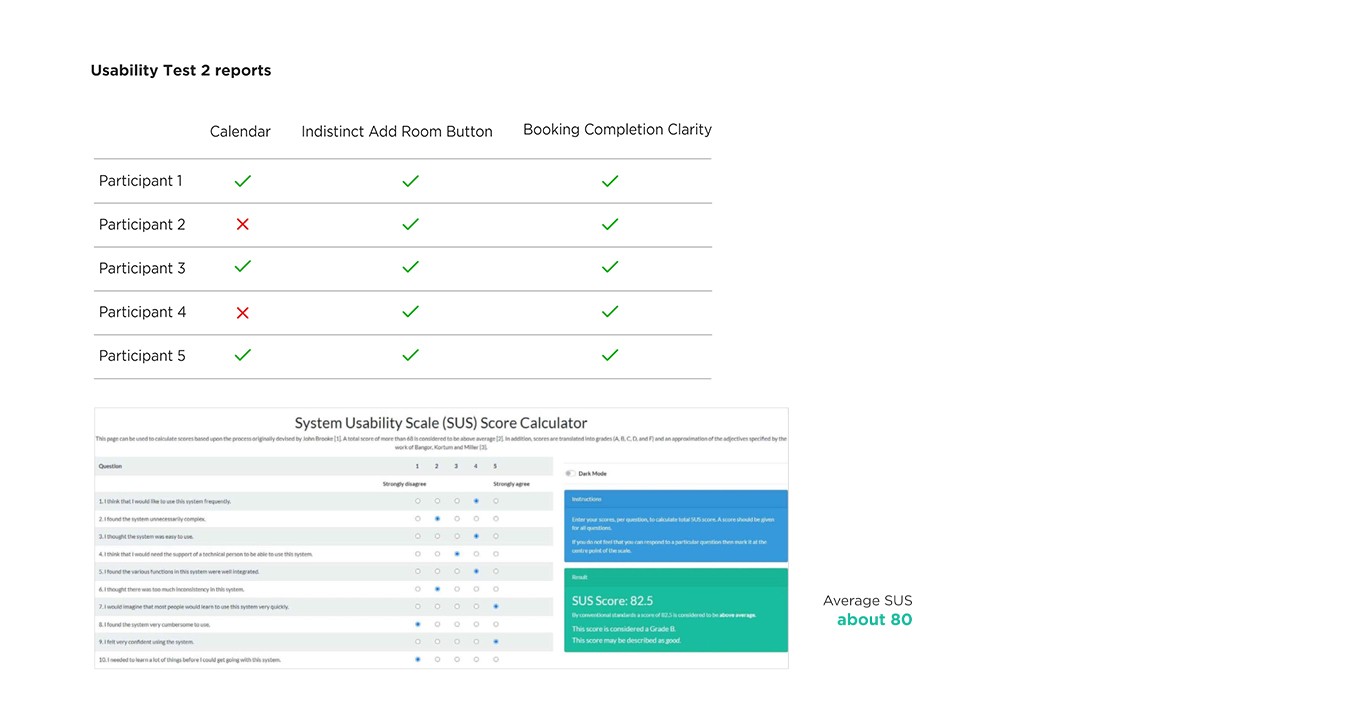
Usability Test: The first usability test was conducted as a guerrilla test at the airport, focusing on two distinct tasks designed to evaluate different aspects of the redesigned booking process. Key Objectives: - To observe how real users navigate the newly designed interfaces and identify any usability issues they encounter. - To validate the effectiveness of the design changes made based on initial research findings. Findings: - Calendar Visibility:It was noted that even with the added grey background, some users still struggled to locate the calendar, indicating that further adjustments might be necessary. - Button Confusion: Many participants were unsure about the "Add Room" functionality due to its previous design. This confirmed the need for a more visible and understandable button. - Booking Confirmation: Users expressed uncertainty about whether their bookings were successful, indicating that the confirmation process needed clearer messaging. Next Steps: The insights gained from hallway usability testing provided valuable feedback that directed subsequent iterations of the design. By addressing the identified usability issues, the design team aimed to enhance the overall user experience before the final launch of improved features. This testing phase was instrumental in aligning the design with actual user needs and behaviors, ensuring the website would be intuitive and user-friendly for all potential customers. Iterations: Based on user feedback and data gathered from usability testing, we aimed to enhance the user experience by addressing identified pain points and improving overall functionality. Key Iterations & UX Enhancements: 1. Improved Calendar Visibility:Users struggled to locate the calendar, so a subtle grey background was added to enhance contrast and accessibility. 2. Streamlined Room Selection: The original plus/minus buttons caused confusion. They were replaced with a more intuitive in-form selection, reducing cognitive load and unnecessary interactions. 3. Clearer Booking Confirmation: A success illustration was introduced to provide immediate feedback, and primary buttons were adjusted to a more subtle design to reinforce clarity. 4. Continuous Optimization:Usability insights indicated ongoing challenges with calendar interaction and button visibility. Further refinements were planned post-launch based on real-user feedback. Validation Through Usability Testing: This time, the tests were conducted on-site at the company, where users were invited for in-person sessions in a dedicated user testing environment. Final Outcomes & Impact: Usability testing revealed that while calendar findability had improved, some challenges remained. However, given the significant positive changes achieved at this stage, we decided to launch the new version. Instead of making further adjustments prematurely, we prioritized gathering broader post-launch data to guide more precise refinements in future iterations. The redesign proved highly successful. Reports from the sales and marketing teams, along with various performance analytics, confirmed a 0.7% increase in overall conversion rates. Given the company's high transaction volume, this uplift represented a substantial impact, earning recognition and praise from company leadership and stakeholders.