Mashhad is the second-largest city of Iran, with approximately 4 million inhabitants. Thousands of visitors, pilgrims, and workforce staff travel to the city every day, totaling millions annually. The municipality has for years been working on a so-called "Smart City" project, including digitalization of public services and intelligent systems, reduction of in-person visits, and enhancement of the quality and efficiency of e-services.
Mashhad is the second-largest city of Iran, with approximately 4 million inhabitants. Thousands of visitors, pilgrims, and workforce staff travel to the city every day, totaling millions annually. The municipality has for years been working on a so-called "Smart City" project, including digitalization of public services and intelligent systems, reduction of in-person visits, and enhancement of the quality and efficiency of e-services.
Mashhad is the second-largest city of Iran, with approximately 4 million inhabitants. Thousands of visitors, pilgrims, and workforce staff travel to the city every day, totaling millions annually. The municipality has for years been working on a so-called "Smart City" project, including digitalization of public services and intelligent systems, reduction of in-person visits, and enhancement of the quality and efficiency of e-services.
Visual Design
UI & UX Design
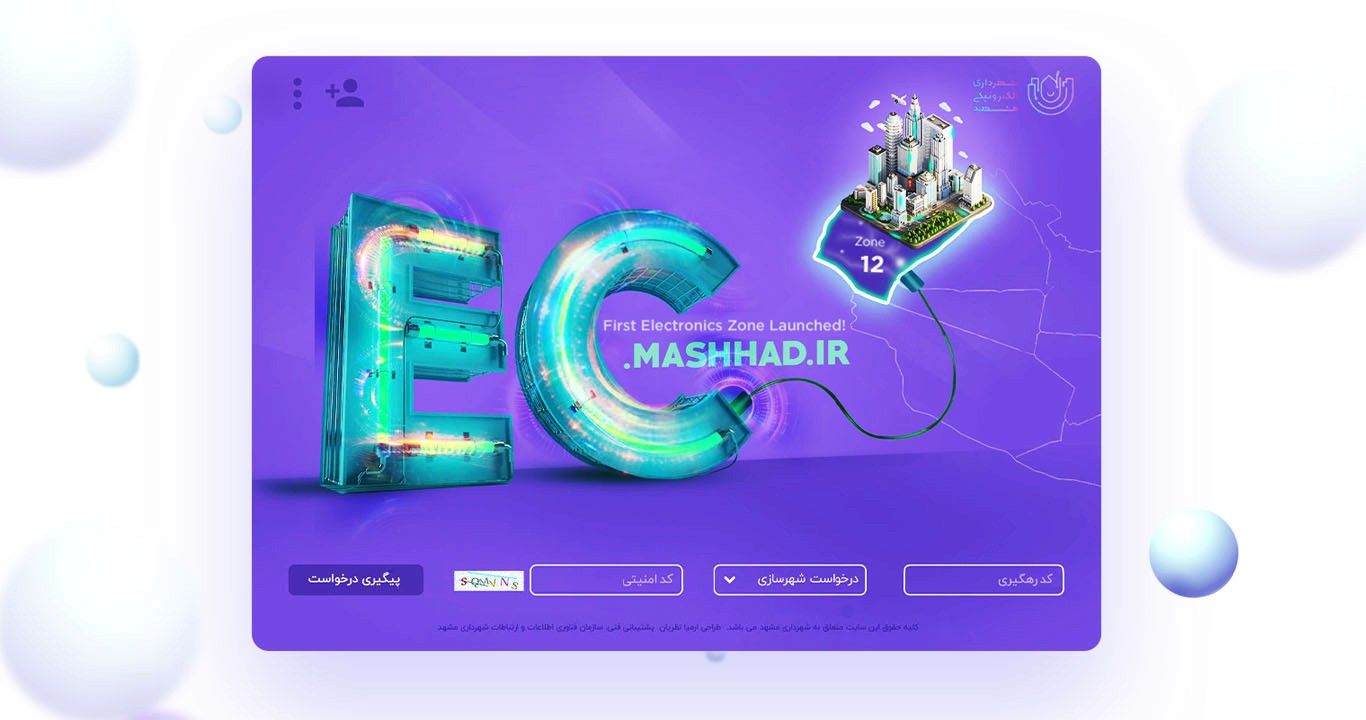
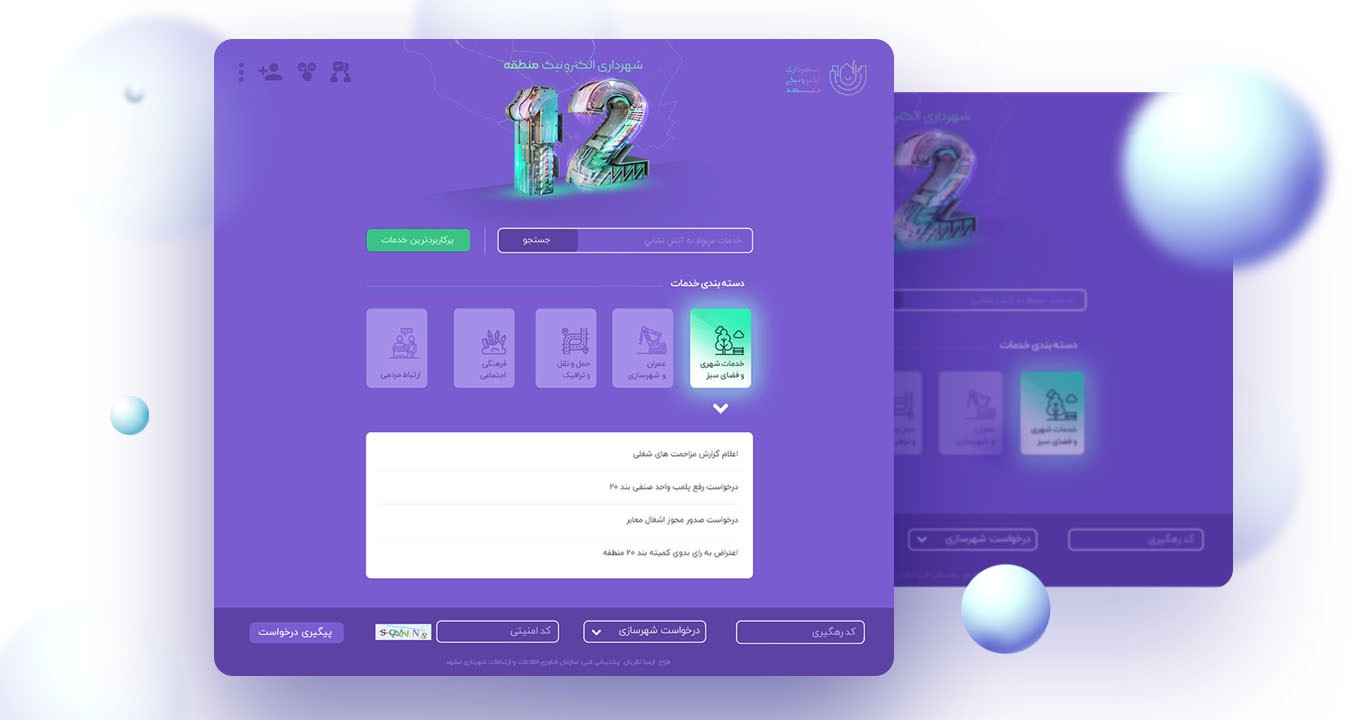
In these screenshots, you can see parts of the initial launch of this website. Initially, they piloted some e-services in District or Zone 12 as a test phase to evaluate and refine the implementation.
This page serves both as an announcement of the phased rollout of the Smart City project across different districts and as a user-friendly interface for the most essential task—tracking requests. To enhance accessibility, a floating bar was fixed at the bottom of the page for quick access to request tracking.
In the following pages, services were categorized, and complexity was reduced by minimizing options, ensuring a streamlined and intuitive user flow for accessing desired services.